

What is Music Licensing?
Music licensing is the process of obtaining permission from the copyright holder of a song to use that song in your video or other projects. When you obtain a license, you are usually granted the right to use the song for a specific purpose.
How Much Does Music Licensing Cost?
The cost of music licensing can vary depending on a number of factors, such as the type of license you need and the length of the song. Typically, licenses for popular songs can cost hundreds or even thousands of dollars. However, there are also many affordable options available, with some licenses costing less than $100.
How To Get Licensing For Music?
To license your own music you need a music publisher or sync representation agent. You can find these by searching online or attending music industry events. If you want to license popular songs, you will need to contact the copyright holder directly. This is usually the music publisher or record label. Consider Vampr Publishing if you are currently looking to license your music for sync opportunities.
How Do You Get a Music Licensing Deal?
You can obtain a music licensing deal by registering with a music licensing company. Music licensing companies act as intermediaries between copyright holders and those who need to license their songs. To register with a music licensing company, you will need to provide them with the necessary information and song metadata.
What is Music Sync Licensing?
Sync licensing is a type of music license that allows you to use a song alongside moving picture ie. a film, tv show, video game or advertisement. Sync licenses are typically obtained from the copyright holder of the song, which is usually the music publisher.
Why is Music Licensing Important?
Music licensing is important because it ensures that copyright holders are compensated for the use of their songs. Additionally, music licensing helps to ensure that only those who have the rights to use a song are able to do so. This helps to protect the rights of copyright holders and prevents unauthorized use of songs.
How Do You Submit Music For Licensing?
If you are interested in submitting your music for licensing, you can contact music licensing companies or copyright holders directly. You will need to provide them with your contact details and project information. In addition to that, you may need to submit a demo of your song. Consider Vampr Publishing for your music licensing needs.
What Are Music Licensing Terms?
Music licensing terms are the conditions under which a song can be used. These terms are typically set by the copyright holder and may include things such as the length of the license, the territory in which the song can be used, and the type of use.
What Happens If Someone Uses My Song Without My Permission?
If someone uses your song without your permission, you may be able to take legal action against them. This can include damages and penalties. Aside from that, the person who used your song without permission may also be required to remove the song from their video.
How Do You Negotiate Music Licensing?
When negotiating music licensing, it is important to keep in mind the needs of both parties. Copyright holders need to be compensated for the use of their songs, and those who want to use the song need to be able to do so within their budget. Usually a music publisher, entertainment lawyer or sync agent will handle the negotiations on the part of the songwriter.
What makes your sound unique? Is it the instruments you are using, the processors you are applying or the way you arrange your songs? Whether you are in a traditional rock band or you make EDM, there are various ways to distinguish your sound from the rest of the pack.
Every band is full of unique individuals and instead of trying to polish your sound to fit into a box, think of how you can bring your own distinct talent together to make something one-of-a-kind.
Read on for some advice on how to break away from the pack while knowing how to make unique music and create a unique sound!
Listen to Lots of Types of Music
Lemmy from Motorhead loved The Beatles. Madonna loves Abba. Listening to your favorite bands can inspire you when you play your own music.
Listening to a wide range of music can help you understand what is possible. Maybe your rock song needs a jazz time signature or a folk song can take some inspiration from a dance track.
Open your mind, and listen to lots of music so that when you pick up your instrument, the world of possibility is available to you.
Tap into your Personal Experiences
The best writing comes when you write about something you know about. Tapping everyday experiences can be the best way to speak honestly and write a great song. There is a lot of originality when you tell your own story. Often it’s these personal yet universal songs that connect to a wider audience.
Explore Plugins
Whether you are looking for a lo-fi retro analog sound or you want to add orchestral layers to a simple pop song, plugins are a great way to push the barriers of your sound. Explore plugin options and play around with them. Experimentation is key to seeing what is possible.

Be Yourself
One mistake that bands sometimes make is trying to write songs that they think will work within a genre. While it can be a fun challenge to write a love song or a pop anthem, be sure to bring your own personality and sound to that format. It’s ok to mimic those that inspire you as a starting point, but take that approach and run with it.
Get Inspired Through Other Artforms
Going to the movies or an art gallery can help your music. Taking in the storylines and colors and textures of a film or a painting may inspire creativity in your own work.
Whether you are inspired by the technique or the emotion that you experience in the other work, art forms are symbiotic and can be a great starting point to write a song. Ballad Of The Absent Mare by Leonard Cohen, 16 Shades of Blue by Tori Amos and An Architect’s Dream by Kate Bush were all inspired by different forms of art.
Look for inspiration and different ideas in different media to help you know how to make unique music while creating a unique sound that breaks away from the pack.
Creative tension has its moments but forging cohesive relationships with band mates is the best way to get creative work done. Amid the constant pressures of trying to build an audience, and attract A&R teams, bands can sometimes fall out of sync with band members turning on each other. The more you do to establish a strong relationship with your collaborators, the better poised you will be to work through the roadblocks and big wins and stay true to your creative essence. Whether you just formed your band or you’ve been playing together for years, these tips will help you establish strong relationships with your band mates that will lead to a more healthy and productive working relationship. Building better relationships with Your Band will lead to longevity and true happiness despite the unbelievably tough times that every band experiences while touring on the road!

Set Goals
“A goal without a plan is just a wish” – Antoine de Saint-Exupery
When it comes to your music career, your goals need to be realistic and specific. You should be able to quantifiably measure their success. For them to be achievable for you as an artist, you need to be able to give it a set time period for it to be accomplished by and follow the necessary steps to keep the trajectory going. Always write down your goals. Once they’re written down, you can look back at them whenever you start to feel lost and get right back on track. For some people it can be hard to come up with clear and concise goals as a group. One good way to simplify the task of setting goals as a group is to stick to the S.M.A.R.T method. Created in 1981 by George T. Doran, S.M.A.R.T is an acronym that helps you create specific criteria for your goals to help improve the chances of their success.
What does it stand for?
S – Specific
M – Measurable
A – Achievable
R – Realistic
T – Timed
Following this method can help create realistic goals within a quantifiable timeline while identifying where all members can contribute to the effort. For further tips and techniques of goal setting related directly to bands, this article from CyberprMusic has some great pointers.

Define a Workflow that Works for Everyone
Creativity should not equate to or create chaos. A well-organized plan of execution is paramount to any creative project, as well as allowing oneself the freedom to brainstorm openly. But often, when trying to create a project as a team or band, it’s easy to get stuck on insignificant, trivial details along the way, only to watch the initial inspiration dwindle in the hands of frustration. Workflow describes the efficiency of that process and can help you stay focused on the goals. Optimal workflow would essentially mean that the team is able to get songs done within a set time, stay inspired and motivated throughout the process and also keep frustrations and setbacks to a minimum. Some people know how to find the workflow groove and avoid distractions, and others may struggle to define what their most effective workflow is and how to strengthen it. Some band members may be naturally stronger in the workflow production facet. If that’s the case, it may be helpful to check in with other band mates that might struggle with staying on task. If that sounds familiar be sure to read this great article from Band Barracks that’s full of practical and simple methods to increase workflow productivity.
Set Clear and Healthy Boundaries
Creating healthy boundaries is empowering and necessary. Unhealthy boundaries, or a lack of boundaries, can lead to an unbalanced relationship which could lead to resentment and unnecessary challenges. On the contrary, having boundaries that are too rigid can lead to isolation, like living in a locked-up castle surrounded by a mote. No one can get in, and you can’t get out. It’s important to learn how to set and also respect others’ boundaries. One way to begin the process of identifying and setting boundaries in the context of being a band member is to identify what it means to you to be a good band member. Once you can carve out some of those values, naming and setting your boundaries (and respecting others boundaries), will come more fluidly. As an example of what makes a good band mate, check out these 14 Rules for Being a Good Bandmate by SonicBirds and see where you agree. Learning to set boundaries can be tricky when you first start, but learning to do so can be beneficial in all relationships in your life. A good place to start learning about how to set boundaries is How To Set Healthy Boundaries In All Areas Of Your Life via Life Goals Co.
Hold Band Meetings to Discuss External Opportunities and Challenges
You’ve heard it before, “it’s called the music business for a reason,” and one business practice that will help you meet your music career goals is holding effective band meetings. If you’ve seen Metallica’s documentary, Some Kind of Monster you’ve seen one of the many examples of the deterioration of a band’s inner-workings when meetings aren’t effective and inspired. You might jam with the band every week, or even be best mates, so it makes sense that you assume you can discuss any topic every time you’re together. But it’s easy to get sidetracked, misunderstand peoples opinions or forget crucial points that you’ve discussed. One great place to start a meeting could be discussing the topics outlined within this article. Are the band’s goals clearly written down, are boundaries set, is there a balanced workflow happening? More great advice about how to create and engage in effective meetings is right here in How to Run Effective Meetings, and Thrive by Atlassian.

Spend Time Together
Just like any important relationship in one’s life, spending quality time with people in our lives can lead to better connections and understanding. Crafting a piece of music between a group of artists with different tastes and perspectives is complicated enough as it is. So of course, keeping your relationship with your bandmates positive is an important element of a band’s success. Bandmates don’t always have to be best friends, that’s unrealistic in some cases. However, if you put in some effort to nurture your relationships on a social level, the band will reap the rewards in the form of better cohesion. Whether you go out for drinks, check out other bands together, or go for a hike, spending time with your bandmates will strengthen your bond and ultimately benefit your music quality. For further insight on the importance of connection in creative relationships, a great place to start is by reading Relationship advice for creative duos, via Digiday.
Sometimes knowing what not to do in a band is just as important as knowing what to do when it comes to building better relationships with Your Band!
Getting on stage is one of the best ways to introduce your music to new audiences and cement the love of your loyal fans.
No matter how large or small the performance, a lot goes into getting it right when you prepare for Live Performances. The sound, the lights, and the stage set-up all play a part in making the performance great.
Whether you prefer to play stripped-down and raw sets in black box theaters and coffeehouses, or your act contains fireworks and a custom light show, every band needs to plan ahead and know how to prepare for a live performance.
We’ve compiled some tips and stage performance techniques to help you prepare for the big event and put on the best show possible.

Practice Makes Perfect
This probably goes without saying, but the single most important factor for nailing your live show is practicing your set. The more you practice, the better.
Make sure you know your part, your cues (like how many times you’ll play through the progression before the song ends, or how long that instrumental break lasts after the second chorus), and make sure you get plenty of chances to practice with anyone else you’re playing with.
And don’t practice mistakes! If you commonly make a mistake in a certain part of a song, work on that section until playing it correctly becomes second nature. Repeating the mistake without addressing it could cause you to repeat it on stage.
Lots of practice will leave you feeling prepared to take the stage and help calm any pre-show anxiety you might be feeling.
Scope Out the Venue
If you can, it’s a great idea to check out the venue you’ll be playing ahead of time. Familiarize yourself with the stage setup, figure out where you’ll be loading your equipment in and out of, and find out about the sound system.
Scoping the venue out ahead of time will also give you a sense of what equipment you’ll need to bring and what you can leave behind. Many venues will supply mics and stands, but don’t take it for granted! If you can’t go in person, a phone call with someone from the venue is a great backup plan.
Once you know what the venue has, put together a checklist of everything you need to bring to the show. Check it as you load up your gear, check it again once you’re packed, and one last time after the show to make sure you didn’t leave anything behind.

Sound Check
Many venues, though not all, will give you a chance to get on stage and hear how you sound in the space before your actual performance. When you set up the show make sure to find out if the sound check is going to be an option, and if so, what time it will happen.
Make sure you and your bandmates are there and loaded into the venue before sound check to take full advantage of your time. This will be the first time you’re hearing yourself on the venue’s mics and PA system, and it’s a great opportunity to figure out how much volume you’ll need in the monitors, and how your instruments and equipment are sounding in the space.
In some cases, the sound check will happen right before your set, with audience members already in the venue. In these cases, many bands will have a song or a riff they can all play together to make sure everything sounds good without actually playing songs from the set before the performance begins—this is a great thing to add to your band’s repertoire for sound checking on the fly.
Bring More Cables
You can’t have too many cables. This is something like a golden rule for musicians, especially ones who play with electric instruments and use modulators and pedals. Although the venue will likely have patches and mic cables, DO NOT assume they will have as many as you need.
As a rule of thumb, act as though the venue will supply mic cables into their PA system only, and you’ll need to patch everything else as though you were at your rehearsal space (hint: see tip #2 for how you can confirm this ahead of time).
Even if you know the venue has extra cables, bring your own. How many times have you had to interrupt practice to tape a faulty patch cable or run to the music shop to replace it altogether? Stuff like this happens even at the biggest venues, so bring extra cables. It costs nothing and it could potentially save your show.
Go With the Flow
Put simply, shit happens. This is true all the time, and it’s especially true during the jittery moments leading up to a show. Maybe your bassist is running late and their phone died. Maybe you locked the keys in the van before you finished loading out and you’re supposed to be on in fifteen minutes. If you’re prepared and you’re ready to embrace a go-with-the-flow attitude, you’ll find a workaround for anything that comes up.
Keep in mind: if it seems like a disaster at the time, it’s a good story later. Once you’ve mastered this step, nothing can stop you from killing it when you hit the stage.
Which one of these techniques do you think will help you the most and what do you plan on implementing into your gigs?
Whether you want to sound like Metallica or Bruno Mars, a good rhythm section is the backbone to any good band. There are so many benefits to improving your rhythm section from simply wanting a good groove or you driving listeners to get up and dance. The best bands in every genre of music can be distinguished by their solid rhythm section. Creating a dynamic rhythm section is the foundation of a good band. These five tips will give you advice on how to improve rhythm and timing and build strong rhythms!

Keep it Simple
This is the best place to start is to simply learn to play together and keep a steady tempo. As a solid rhythmic foundation, each player needs to be individually responsible for his or her own timing, intonation, syncopation, and overall knowledge of the tune. If the players understand the driving musical force of that particular song, and their place within it, it will help them to keep a steady tempo as a unified band. This is an example of every instrument and musician serving a distinct purpose and serving the song, together.
Embrace Call & Response
Implementing and installing “call and response” in your music tool kit, can instantly take everything your band is doing to the next level. The idea is simple: a statement is made or a question asked, and the response or answer follows. Sometimes the response is simply a repetition of the leader’s call, and sometimes it’s a traditional statement of affirmation. You hear this in music of all kinds – the back and forth musical ‘dialogue’, is what’s called “call and response.” For some in-depth looks at different types of “call and response”, check out this great article from FlyPaper on Soundfly to break down where it happens and what to listen for. Musicians can often create an extremely propulsive, syncopated sound precisely because they’re not seizing every opportunity to fill the repertoire by themselves. This is a powerful, yet subtle, example that sometimes it’s not what you play, but what you don’t play that creates the forward momentum of a truly great rhythm section. The cohesion between a successful call and response could be described as a high level of empathy and listening to one another, which will result in some truly dynamic sounds.

Contrast Vocals with Rhythmic Phrases
If you look up contrast in the dictionary, you’ll find the following definition: the state of being strikingly different from something else, typically something in juxtaposition or close association. It’s the concept of having two elements, which differ significantly from each other. Rhythm is one element that can really come alive with the contrast principle. For instance, choosing shorter note lengths in your verses and bridge, and longer ones in your chorus. They manage to avoid chaos because all the parts are well engineered to create an uncluttered finished product. And most importantly, there’s still plenty of space for the vocals. The rhythmic contrast principle works in almost any genre of music, from Classical to hip hop and modern day pop. If you find that your own songs feel like they are lacking and you can’t pinpoint why, check out the rhythms you’ve been using, and see if there are ways to add some contrast vocals between the verse and the chorus.
Build on The Bassline
In most bands, a combination of drums, bass, guitar, percussion, and keys make up the rhythm section. With just about every groove, you have the choice to keep it simple or make it more complex. In dense musical situations, keeping things simple will make room for other parts to fit in, which is always a great idea. But it can also be good to create something complex that works together with other parts as well. Particularly for basslines, one of the most challenging things to work out is how the drums will interact with the rhythm to make music that achieves something specific, without creating a power struggle. When writing music, it’s also important to consider that perfect balance between bass and drum parts that will be predictable, those that will be complex, and of course, those that converge to create a solid groove. Although moments of complete unison between drums and bass are necessary for a song to groove and utilize cohesion, total unison throughout an entire tune doesn’t afford the players any freedom to add embellishments to their parts. It also prevents the song from creating any kind of tension and release, a key aspect of evocative songwriting and groove-crafting.
Let the Groove Flow
Being adaptable and versatile while playing will help create a flow the whole group can get on board with. When trying to cultivate a truly great rhythm section, musicians should try to remember that, as rhythm players, they are accompanying 80% of the time, and drummers or bass players are accompanying even more than that. If you spend a lot of time in a power struggle and want to lead, not only will it be hard to ever attain a unified rhythm, it will also be hard to find that groove flow. Being able to adapt to your musical environment is extremely important. Whether it’s the style you’re playing, the skill level of musicians you are playing with, or the physical environment you are playing in, a good rhythm section player needs to rise above all of it. So leave your ego at the door, and get ready to play as a band and not a soloist.
Now that you know how to improve rhythm and timing, what tips are young most excited about integrating into your process?
While vintage gear is cool and can help you create a vibe, don’t forget to incorporate new tech items that can benefit musicians in a number of ways. These tools can offer you new sounds and help make your process easier and smoother. You would be hard pressed to find the famous LA2A compressor from 1962 brand new at your local music store, but with new music technology in 2022 you might not have to! There are plug-ins and VSTs that can replicate some of the best sound technologies and guitar pedals out there without breaking the bank! We will outline how to make music on your own using the latest music technology.
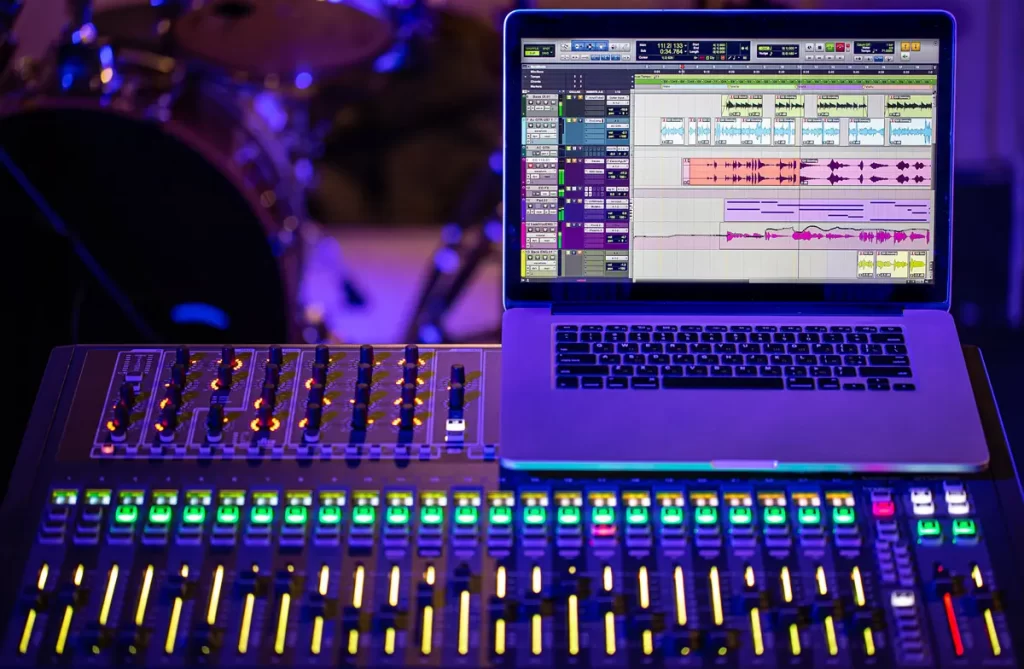
Boss’s Pocket GT guitar processor? Zoom’s G6 touchscreen guitar pedal? Gibson’s augmented reality app? What new music tech tools are you using in your music practice? Embracing new tools can give you access to new sounds, and can improve your process for making music. Read on to learn about the latest gadgets that can help you create and explore new musical sounds and can boost your skills.
Boss’s Pocket GT Guitar Processor
Boss’s Pocket GT guitar processor tool brings the power and sound of their massive amps to a small device that makes it easy to record YouTube videos. Instead of needing a massive amp, The Pocket GT communicates with Boss’s Tone Studio and Tone Central mobile/desktop apps. The app offers a range of amps and effects and you can save your performance settings. The device connects to Bluetooth audio or directly into your computer over USB.
Zoom’s G6 Touchscreen
Zoom’s calls its G6 device “the future of guitar pedals” a name it has earned being the first guitar pedal with a color touchscreen. Guitar players can color-code stomp effects and use the colors on the screen to quickly switch between settings. The tool includes 135 effects and 68 rhythm patterns that can be programmed into infinite loops. The device honors classic sounds of some of the best known amps in rock n’ roll with new takes on how to distort to an amplifier’s sound.
Gibson’s App
Gibson App’s smartphone app makes life easier for guitarists from beginners to experts. The app includes tools for learning how to play the guitar, as well as a tuner and play-along tabs. Players can learn through an augmented reality feature that adapts to the player’s level and provides lessons accordingly. The learning becomes interactive by feeding players challenges based on their level, providing real-time feedback and adjusting as they master different techniques. Whether you are a rookie or seasoned guitar player, you can use the app to improve your technique and make your band sound better. You simply need your guitar, the app and a pair of headphones.
The app also offers a virtual tuning tool and even free one-on-one consultation with a Gibson pro guitar tech to make sure you are taking the best possible care of your gear.
Soundbrenner Core Metronome
Soundbrenner’s Pulse smartwatch was created just for musicians to help improve their performance. The Soundbrenner Core includes a built-in metronome that players can use to ensure they are keeping in time with the music. A great device for touring musicians that might end up in a room with sound challenges and an inability to headband members. The watch comes with straps for players to attach the metronome to their arm or leg, a small magnetic tuner disc that can attach to an instrument, as well as a pair of headphones so that the player can tune in.
Snark Super Tight Tuner
The tiny Snark Super Tight Tuner mounts on to the tip of your guitar and uses it to tune your instrument. The device has a 360 degree rotation, so once you mount it, you can turn it towards you. The digital screen lets you set the key to E or D and quickly tune up your band. The tool also lets you adjust your pitch calibration and even includes a transpose feature so that when you use a capo, you can adjust the flat tuning to a standard E. The Snark Super Tight tuner also includes a Tap Tempo metronome, so you can always keep yourself in time.
Roland Micro Cube Practice Amp
Roland’s Micro Cube Practice amp makes practicing easy no matter where you are. Driving in a tour bus or hanging out at the beach, you can easily carry this battery-powered device along and kick up the jams. The ultra-compact portable DSP guitar 5-inch speaker runs on 20 hours of battery power and includes a handful of DSP effects including chorus, flanger, phaser, tremolo and Delay/Reverb. No excuses to get your practice on. No need for a wall of Marshall stacks.
Korg’s DW-800 Synth
Korg has updated its classic DW-800 Synth with a modern touch. The Modwave lets players modulate 200 different wavetables, each made out of up to 64 waveforms. Keyboard players can change the character of these waveforms with modifiers and morph types. This gives you vintage synth sounds with endless modern possibilities.
No matter what instrument you play or what genre of music you are playing, these small new-school tech devices can help you improve your game and have some fun. Embracing new tools can also boost creativity as you look for new ways to manipulate and evolve your sound and get it out into the world. What’s your favorite New music technology in 2022?