

Hey there, future music legends,
So, you’ve got the talent, the passion, and the drive to make it big in the music industry. That’s awesome! But let’s get real for a second—no one becomes a superstar all on their own. Collaboration is the secret sauce that can take your music career to the next level. Don’t believe us? Read on to discover why teaming up with other artists is the ultimate game-changer.
1. Upskilling Like a Pro
Learn New Techniques
When you collaborate, you’re essentially getting a free masterclass from another artist. Whether it’s a unique way to strum a guitar, a killer mixing technique, or a fresh approach to lyric-writing, you’ll pick up skills that can make your own music better.
Expand Your Genre Horizons
Ever thought about blending jazz with hip-hop, or country with EDM? Collaborations can open doors to new genres and styles you’d never have explored otherwise. The result? A richer, more versatile musical portfolio.
2. Networking: It’s Not Just for Business Majors
Industry Connections
Your collaborator might introduce you to their manager, who knows a record label exec, who’s friends with a festival organizer—you get the picture. One collaboration can set off a chain reaction of networking opportunities.
Social Media Shoutouts
A simple tag or mention from a fellow artist can expose you to their followers, and vice versa. It’s a win-win situation where both parties get to grow their online presence.
3. Sharing is Caring: Multiply Your Fan Base
Cross-Promotion Magic
When you collaborate, both artists promote the project to their respective fan bases. This is a fantastic way to introduce your music to new ears and gain more followers.
Joint Performances
Imagine doubling the crowd at your next gig by performing with another artist. Joint performances can create a buzz that neither artist could achieve alone.
4. The Art of Songwriting: Two Heads are Better Than One
Creative Synergy
Two creative minds can generate ideas that one might never conceive alone. The blending of different artistic visions can lead to groundbreaking tracks that set you apart in the industry.
Accountability and Motivation
Having someone to bounce ideas off can keep your creative juices flowing. It’s easier to beat writer’s block when you’re not going it alone.
5. The Joy of Shared Success
There’s something incredibly rewarding about celebrating a hit song or a successful gig with someone who was part of the journey. Shared success not only strengthens your professional relationship but also adds a layer of emotional richness to your career.
So, what are you waiting for? Reach out to that artist you admire on Vampr, or let our matching algorithm suggest collaborators to you – slide into those DMs, and start making magic happen. Your future self will thank you.
Right now, producing music has never been more accessible. If you’ve ever tapped your fingers to a beat or hummed a melody, you’ve already taken the first step towards music production. With the right tools and guidance, you can transform those ideas into full-fledged tracks. This guide is for those eager to dive into the world of music production from the comfort of their homes.
1. Essential Gear for Your Home Studio:
- Laptop or Desktop Computer: This is your primary tool. Ensure it has a decent processor, ample RAM, and enough storage. Both Mac and Windows have their merits, so choose based on your preference and budget.
- Digital Audio Workstation (DAW): This software is where you’ll create, edit, and mix your music. Popular options include Ableton Live, FL Studio, Logic Pro X, and Pro Tools. Many offer free or lite versions to get started.
- Audio Interface: This device connects your instruments and microphones to your computer. Brands like Focusrite and PreSonus offer affordable and quality options.
- Studio Monitors and Headphones: Invest in a good pair of studio monitors and headphones. They provide an accurate representation of your sound, crucial for mixing and mastering.
- Microphone: If you plan to record vocals or acoustic instruments, a quality microphone is essential. The Audio-Technica AT2020 is a great starting point.
- MIDI Controller: While not mandatory, a MIDI keyboard or pad controller can be invaluable for creating beats and melodies.
2. Setting Up Your Workspace:
- Location: Choose a quiet space, free from external noise. Bedrooms can work perfectly.
- Acoustic Treatment: Improve your room’s sound with some basic acoustic panels. They help in reducing reflections and ensuring a clearer sound.
- Ergonomics: Ensure your desk, chair, and equipment are set up ergonomically. Comfort is key for those long production sessions.
3. Learning the Basics:
- Tutorials and Online Courses: Platforms like YouTube, Skillshare, and Coursera offer countless tutorials. Whether it’s mastering your DAW or learning music theory, there’s a resource out there.
- Experiment: The best way to learn is by doing. Play around with your DAW, test out different sounds, and don’t be afraid to make mistakes.
4. Collaborating with Others:
- Networking: Join online music production forums, attend local music events, or participate in online beat battles. Connect with likeminded creatives in the Vampr App. Building relationships is key.
- Online Collaboration Tools: Platforms like Splice or Endlesss allow producers to collaborate in real-time, regardless of location.
- Feedback: Share your tracks with friends, family, or fellow producers. Constructive criticism can help you grow.
5. Tips for Success:
- Stay Consistent: Like any skill, consistency is key. Dedicate time each day or week to hone your craft.
- Backup Your Work: Always have backups of your projects. Cloud storage or external hard drives can be lifesavers.
- Stay Inspired: Listen to different genres, take breaks, and never stop learning.
- Invest in Yourself: As you progress, consider investing in advanced courses, better gear, or even music production workshops.
Embarking on the journey of creating your ideal home recording space is a thrilling endeavor that promises to unlock creativity within the comfort of your own walls. In this Redfin article we’re featured in, we explore tips and insights from different experts to help ensure your home studio is the perfect mix of musical expression and audio excellence. So, whether you’re looking to build your recording space in an apartment in Providence, RI, or your home in Cambridge, MA, buckle up as we craft a home recording space that meets your aspirations.
For more hot tips on starting a career in music, check out or blog here.
As a music creator you already know how important it is to have slick audio, video and photos. However, production and promotion can be costly at a professional standard.
Here’s where we have an exciting opportunity for all Vampr users!
Our friends Swissbeatbox (SBX) are planning a European adventure where they’ll be collaborating with all kinds of creative people along the way. Better yet, they are filming the entire thing to host on their YouTube and social channels that boast in excess of FIVE MILLION subscribers and followers.
Want a piece of the action? It’s totally possible when you enter this competition to win a…
Vampr x SBX Production & Promotion Pack
- Video & Audio production for one piece of music (6mins max)
- Photo shoot for your social media
- Exposure on SBX social media (5M+ followers)
- Exposure on Vampr social media
YOU will own this fully edited content to use how you wish.
FAQs
Who can enter this competition?
Anyone located in Europe with a public-facing Vampr profile.
What if I don’t have a Vampr profile yet?
Easy! Download the Vampr App, create your profile and then submit it to this competition. To get some tips on how to make your profile stand out, read this blog entry.
I don’t beatbox, can I enter?
You do not have to be a beatboxer! All styles of music will be considered – from singer-songwriters to producers, all types of musicians, pop groups to metal bands!
How will I know if I’ve won?
This competition will be drawn on September 1st and the winner will be notified by email on September 1st.
What’s included?
A fully edited clip (up to six minutes in length) of video or audio that you will own and can use how you wish. You’ll also get a photo shoot of images for you to own and use however you like. The SBX team will travel to you.
Plus, you will get featured on both SBX and Vampr social media.
Who are SBX?
Swissbeatbox are the world’s largest community of beatboxers in the world. They boast a seriously impressive community of creatives across their highly engaged socials and website. Many member of SBX use Vampr to connect and collaborate.
Songwriting is a deeply personal and creative journey that allows you to express your thoughts, emotions, and experiences through music and lyrics.
However, approaching the songwriting process can be problematic, especially if you’re just starting or seeking to enhance your skills. Depending on what you read, you might think songwriting can be done in 20 minutes, such as with REM’s Losing My Religion. Or, you might be told it takes to slow boil a song, as in the case of My Chemical Romance’s hit, Welcome to the Black Parade, which took five years. You might be told to start with lyrics, or a hook, or a melody. It can be daunting!
In this article, we will explore some essential approaches to help you navigate the songwriting process and unlock your creative potential.
Find Inspiration
Inspiration can come from a multitude of sources, from places and people, memories or stories you’ve heard. It could be a personal experience or an emotion you want to convey that you haven’t felt. Johnny Cash, one of the greatest country music songwriters, cited a song called Pickin’ Time as the one he wrote that he loved the most. Why? Because it was personal to him and his experience growing up as the son of a cotton farmer.
To kickstart your songwriting process, surround yourself with things that inspire you—read books, watch movies, listen to diverse genres of music, or take walks in nature. Allow yourself to be open to new ideas and perspectives, and when all else fails, write about home!
Start with a Central Idea
Every great song usually revolves around a central idea or theme. It could be a concept, a specific emotion, or even a catchy phrase. Begin by brainstorming and jotting down ideas related to your chosen theme.
Bruce Springsteen did this with his often misunderstood anti-war song, Born in the USA. Springsteen wrote the song around the idea of disappointment at the treatment of veterans returning from the Vietnam War but developed it to become the story of an individual. Like the Boss, you should take time to develop your core ideas further, allowing them to guide your song’s direction.
Collaborate and Seek Feedback
Collaborating with other musicians or seeking feedback from trusted friends or mentors can provide valuable insights and fresh perspectives. Collaborators can bring new ideas and approaches to the table, sparking creativity and pushing your songwriting boundaries. this is something we have previously explored in our article ‘How To Collaborate With Other Musicians‘.
Feedback from others can help refine your work, identify areas for improvement, and highlight the strengths of your song. For instance, John Lennon wrote Imagine, arguably one of the most beautiful songs of all time, whilst Yoko Ono sat beside him at their home in Tittenhurst Park. Many of the themes in the song were inspired by her 1964 book Grapefruit, and Lennon later confessed the writing credits should have been shared.
Experiment with Different Approaches
Don’t be afraid to try different approaches to songwriting, even if it means trying different genres and ideas. Experiment with different song structures, chord progressions, or even writing lyrics before music (or vice versa). Play around with different instruments or use technology to generate unique sounds. There’s no rule that makes it easier or harder to write good music.
This is something typified by Tim Armstrong, frontman of the punk band Rancid, who has built up a stellar reputation as a songwriter in the modern day. For instance, their 1998 album Life Won’t Wait moved away from their punk roots and worked with reggae fusion, something he then parked for seven years before working on his self-titled 2007 release, backed by reggae outfit the Aggrolytes.
Embrace the Rewriting Process
Songwriting is a gradual process, and whilst some songs are perfect immediately, most will take time to cook. Rarely does a song emerge fully formed from the first draft. That’s one of the key things Florida singer-songwriter Bacon James explains in his songwriting guide – rarely is your tune perfect straight off the bat. Instead, you must embrace the rewriting process, allowing yourself to refine and reshape your ideas. Experiment with different melodies, chord progressions, and lyrical phrasing. Don’t be afraid to discard parts that don’t fit and build upon what works.
Even the very best songwriters of all time, such as Bob Dylan, will keep working on a track. His Tangled Up In Blue took him two years to write, whilst Bohemian Rhapsody was first put to paper in the late sixties but didn’t drop until 1975.
Conclusion
Approaching the songwriting process requires a combination of inspiration, routine, experimentation, collaboration, and trust in your instincts. Remember that songwriting is a journey of self-expression, growth, and exploration.
By Queenie Kirk. Published by Alli Galloway for Vampr.
For more insight from Queenie Kirk, read her blog about album art here.
Setting up a complete and professional profile on Vampr is essential for those just starting their music journey, through to pro musicians. Why? Because every artist needs a place to showcase their talent, connect with other artists, and stand out to industry professionals. Here are some steps to ensure your Vampr profile reflects you in the best possible light so you can seize every opportunity.
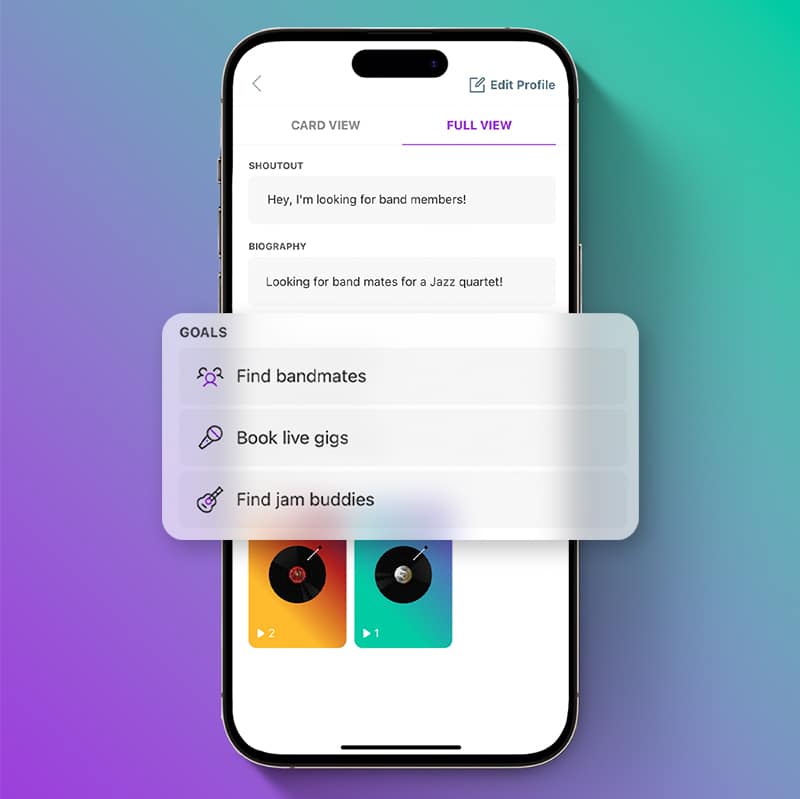
Set Clear Goals
- Make it clear why you are using Vampr. If it’s to find bandmates and collaborate with a specific type of artist, you can now add your goals to your profile. This makes it easier to connect with relevant creatives. Whether you are using Vampr to start a band, seek mentorship, gain paid work, or find a top-liner for your beats – let the community know what you’re looking for. Simply select ‘Edit Profile’ and choose the goals you’d like to display.
- Be concise with what your career goals are. Do you want to DJ around the world, or do you prefer to stay behind the scenes writing and recording? There are many career paths in music, so think about what works for you and the lifestyle you are building.
Profile Picture and Bio
- Choose a high-quality profile picture that represents your professional image as a musician or music producer. It should be clear and visually appealing.
- Craft a compelling bio that highlights your musical background, achievements, and goals. Be concise, engaging, and include relevant keywords to attract potential collaborators and industry contacts.
Showcase Your Work
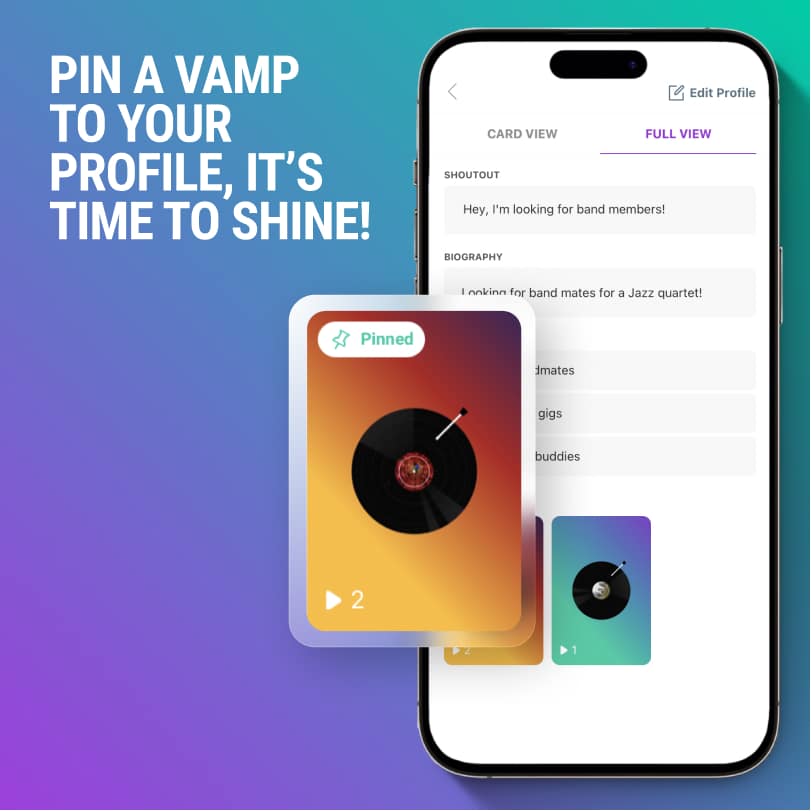
- Upload Vamps of your best music tracks and videos. You can now pin one to your Vampr profile for max visibility and to really stand out. You can use samples, or production demos – just ensure that the audio quality is excellent to captivate listeners.
- Include a variety of genres or styles to demonstrate your versatility and range as an artist or producer.
- Provide links to your official website, social media accounts, and streaming platforms to drive traffic to your other online channels.
Collaboration Preferences
- Specify your collaboration preferences and what you bring to the table. Indicate the types of projects you’re interested in, such as songwriting, producing, or session work.
- Mention any specific skills, instruments, or genres you excel in, which can attract artists or producers seeking those particular talents.
- Clearly communicate in your bio your availability and willingness to collaborate, indicating whether you are open to local or remote collaborations.
Professional Achievements and Experience
- Highlight your bio with notable achievements, such as songs you’ve released, awards, chart placements, industry recognition, or previous collaborations.
- Mention any relevant educational background, certifications, or training programs you have completed in your bio section.
- Include a list of artists or industry professionals you have worked with, which can build credibility and attract potential collaborators.
Actively Engage and Network
- Regularly check and respond to messages, collaboration requests, and feedback from other Vampr users. Timely responses show professionalism and engagement.
- Explore and discover other musicians, producers, or industry professionals on the platform. Follow and interact with them, showing genuine interest in their work.
- Participate in Vampr’s community features, such as rooms, discussions, or virtual events. Engaging with the community can lead to valuable connections and collaborations.
Why Representation and Accessibility Matter
A complete and professional profile on Vampr ensures that you are accurately represented in the music industry. It helps industry professionals, artists, and potential collaborators understand your skills, style, and experience. Vampr has made it so easy to be contactable through the platform which increases your chances of receiving relevant opportunities and collaboration requests.
Enhancing Career through Collaborations and Networking
A strong profile on Vampr acts as a powerful networking tool, allowing you to connect with like-minded musicians, producers, and industry professionals. Collaborations with other talented individuals can expand your musical horizons, expose you to new audiences, and potentially lead to exciting projects or career advancements. Building a network within the music community can open doors to opportunities like joint releases, touring, or mentorship, ultimately enhancing your career in the music industry.
For tips and tricks on how to network, read our interview with Sarey Savy here.
You may have heard that vinyl sales are on the rise and not just for music fans who enjoy the warmth of sound quality, but simply as a collectors item too! Vinyl stores such as Vinyl.com are heavily focussed on the vinyl revival, with over 50,000 titles in stock. If you are a recording artist that is interested in hearing your music on this very popular decades old format, here is a step by step guide of things you will need to consider if you want to get your album released on vinyl.
Here’s How To Get Your Album Released On Vinyl
1. Mastering for Vinyl:
Prior to the pressing process, the album’s audio needs to be specifically mastered for vinyl. Vinyl mastering involves making adjustments to the audio to ensure optimal playback on the medium. It typically includes adjustments to the overall frequency response, dynamics, and spacing between tracks to account for the limitations and characteristics of vinyl.
2. Preparing Artwork and Packaging:
Vinyl releases often involve elaborate and visually appealing artwork and packaging. This includes designing the album cover, inner sleeves, labels, and any additional inserts or booklets. The artwork should meet the specific requirements of the pressing plant, which may include resolution, color profiles, and file formats.
3. Choosing a Vinyl Manufacturer:
Research and select a reputable vinyl pressing plant or manufacturer that suits your needs and budget. Consider factors such as quality, turnaround time, pressing capacity, customer service, and any additional services they offer, such as custom color vinyl or special edition variants.
4. Vinyl Manufacturing Specifications:
Work closely with the pressing plant to determine the manufacturing specifications for your vinyl release. This includes decisions on vinyl color, weight (standard is 180g), record size (typically 12 inches), and the number of vinyl sides (single or double LP). Provide the manufacturer with the audio files and artwork according to their specifications.
5. Test Pressings:
Before proceeding with the full production run, the pressing plant will provide you with a small batch of test pressings. These test pressings allow you to evaluate the sound quality, overall vinyl pressing quality, and ensure there are no manufacturing defects. It’s essential to carefully review and approve the test pressings before giving the green light for mass production.
6. Vinyl Production and Pressing:
Once the test pressings are approved, the pressing plant will proceed with the full production run. The audio is cut into lacquers, which are then used to create metal stampers. These stampers are used to press the vinyl records. The records are typically pressed in large machines that heat and press the vinyl pellets into the desired shape and size. Labels and packaging are added during this process.
7. Quality Control and Distribution:
After production, the vinyl records undergo quality control checks to ensure they meet the desired standards. This includes inspecting for any defects, such as surface noise, warping, or mispressings. Once the quality control checks are complete, the records can be packaged and distributed to retailers, distributors, or directly to customers. This is extremely important if you want to release your album on vinyl.
Additional Considerations:
- Vinyl releases often include additional elements like lyric sheets, posters, or download codes.
- Consider the order lead time, as vinyl production can take longer than digital or CD releases.
- Plan a vinyl release date and marketing strategy to build anticipation and generate interest.
- Pricing and sales strategy should factor in the higher production costs associated with vinyl.
- Vinyl releases may require additional licensing or legal considerations compared to streaming releases.
- Consider whether you will handle distribution yourself or work with a distributor to reach a broader audience.
Note: The steps provided are a general outline, and specific details may vary depending on individual circumstances and preferences. It is always recommended to consult with professionals and pressing plants for detailed guidance throughout the process.
Want to add to your vinyl collection? Find all your fave albums at https://www.vinyl.com/search
For more info on how to project manage a music release, read our blog article here.